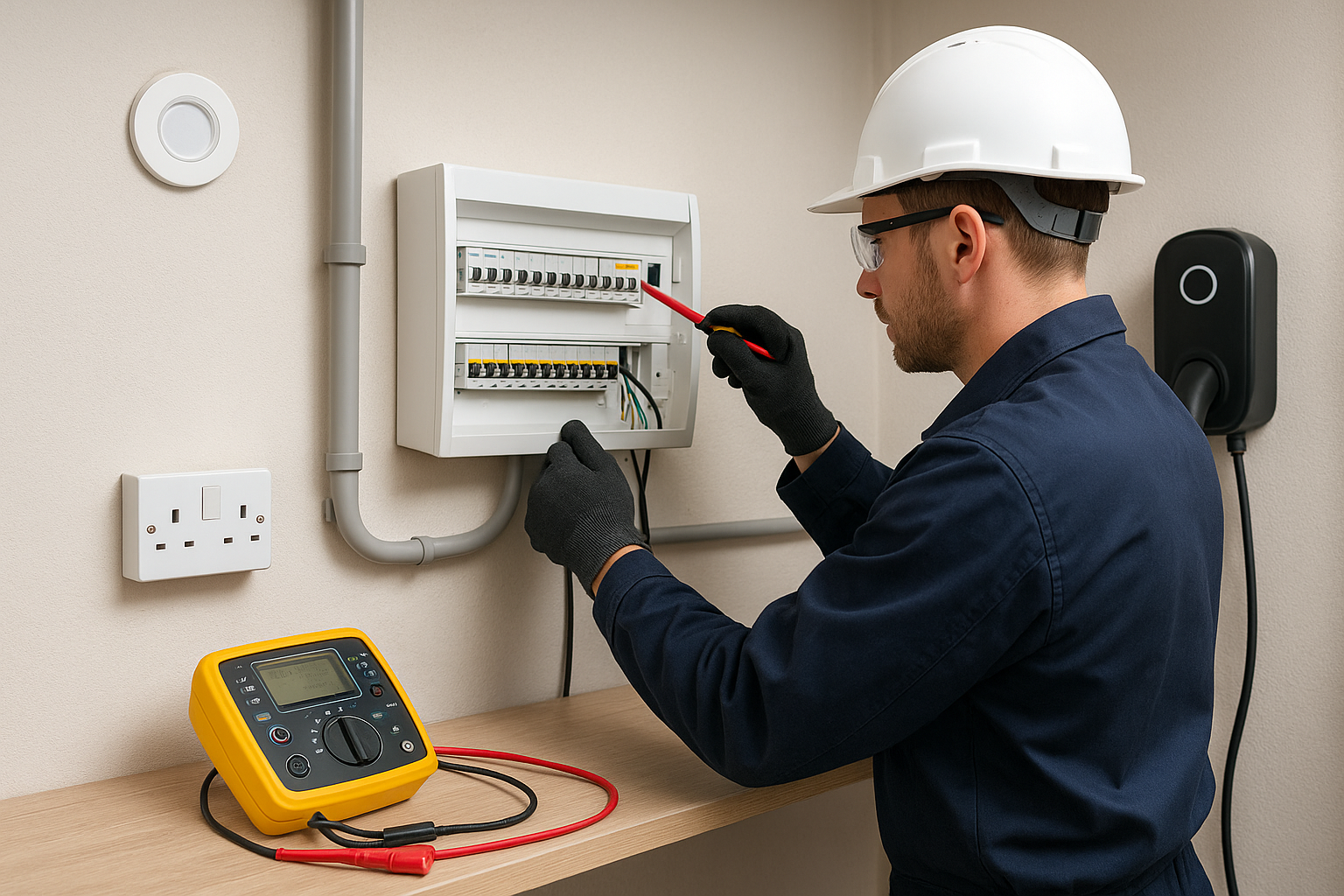
If you need rewiring in Ilford, Voltage Virtues can help with safe, practical electrical work for homes, landlords, property managers and builders. Rewiring is often needed when an installation is showing its age, faults keep returning, or a property is being renovated and the existing circuit and equipment layout no longer suits the way the building is used.
We work across Ilford and nearby areas including Gants Hill, Barkingside, Goodmayes, Seven Kings and Redbridge, with local calls also coming from homes near Ilford Station, Exchange Ilford, Valentines Park, Ilford Lane and Redbridge Town Hall. The type of property matters: Victorian terraces, older maisonettes, converted flats, post-war homes, modern flats, shops and offices can all have different wiring layouts, access issues and upgrade needs.
Our rewiring service is process-led. That means we start with the enquiry, inspect the installation, test what can be safely assessed, explain the repair or upgrade options, carry out the agreed work and give clear advice on next steps. If the issue is urgent, such as repeated tripping, loss of power or signs of overheating, call 020 3633 2471 or email info@ilfordelectricians.co.uk.
Common reasons for rewiring include old rubber or fabric cabling, no earthing, frequent faults, damage found during a renovation or extension, or a property that has failed an inspection. In these cases, it is usually safer to arrange a proper inspection rather than keep resetting breakers or using the installation as it is. If needed, we can also help with related work such as electrical repairs, consumer unit work, lighting installation, socket installation, electrical fault finding and domestic electrician support.
Voltage Virtues operates from 7453 Hainault St, Ilford IG1 4GZ, UK and is available 24 hours for enquiry and attendance where appropriate. We do not make unsupported claims about approvals or guarantees; instead, we focus on clear communication, safe work and practical advice based on the condition of the installation.
Full House Rewiring in Ilford
Full house rewiring is usually the right option when the existing wiring system is widely outdated, unsafe or too limited for modern use. This is common in older Ilford homes where original circuits were never designed for today’s kitchens, home offices, EV-related loads, multiple appliances or higher lighting demand. It can also be the sensible route if there are repeated faults across different rooms, damaged cables, no earthing, or a consumer unit and wiring arrangement that no longer provide a reliable supply.
When a full rewire is needed, we look at the whole electrical installation, not just the symptom that brought you in. That includes the condition of the circuits, the circuit and equipment layout, visible accessories, lighting points, socket positions, and whether the property needs a more usable arrangement for current living standards. Homeowners often ask for a full rewire when they are buying an older property, planning a major refurbishment, or dealing with an installation that has already had too many temporary fixes.
The process normally begins with an initial enquiry and a visit to inspect the property. We then assess the likely scope of work and explain what may be involved, including access to floors, ceilings and walls, and whether the work needs to be phased around occupancy. After the agreed work is completed, testing is carried out and customers are advised on any certification or follow-on steps that may be required for the type of work completed. Some electrical work can be notifiable under Part P of the Building Regulations, so it is important to plan the job properly and keep the paperwork in order.
If you are unsure whether the whole property needs rewiring, we can discuss the symptoms first and help you decide whether a full rewire, partial upgrade or targeted repair is the better option.
Partial and Room Rewiring in Ilford
Partial and room rewiring in Ilford is often the practical choice when only part of the installation is causing problems or when one area needs upgrading during refurbishment. This might apply to a kitchen, loft conversion, extension, bedroom, home office or a room that has been altered and no longer matches the rest of the system.
Customers usually ask for partial rewiring when there are isolated faults, outdated cables in one section, extra circuits needed for new appliances, or a room that has been affected by previous building work. For landlords and property managers, this can be a useful way to deal with specific defects without disturbing parts of the building that are still in acceptable condition. Builders may also need room-by-room rewiring support where first fix and second fix wiring must align with the wider project schedule.
We inspect the affected area, trace the circuit route where possible and test the installation so the fault or upgrade need is properly understood before work starts. That may lead to repairs, replacement of accessories, new wiring routes, lighting changes or socket installation depending on the layout and condition of the room. We always aim to keep the explanation straightforward, because customers need to understand what is being changed and why.
Partial rewiring is not a shortcut if the wider installation is unsafe. If we find signs of wider deterioration, such as old rubber or fabric cabling, poor earthing or multiple unrelated faults, we will explain why a larger scope of work may be more appropriate.
Period Property Rewiring in Ilford
Period property rewiring in Ilford needs a careful approach because older buildings often combine original fabric, altered layouts and previous alterations carried out over many years. Victorian terraces, converted flats and other older homes may still have wiring that has been patched, extended or partially replaced in stages. That can make the installation harder to understand and more likely to develop nuisance faults.
In period properties, the main challenge is usually balancing safety, practicality and the building’s structure. Access can be more difficult, and owners often want to preserve as much of the property as possible while still bringing the electrical system up to a safer standard. We take time to inspect what is present, explain where the risks are and discuss whether the best route is a full rewire, a partial rewire or a staged upgrade.
Typical warning signs in older homes include brittle or discoloured cabling, sockets or switches that feel loose, repeated tripping, hot accessories, lights that flicker, or a property that has failed an inspection. If the property has original-style wiring or a mix of old and newer components, it is worth arranging a proper review rather than assuming the system is fine because it still powers on.
For period properties near Ilford Lane, around Redbridge Town Hall or close to the station area, we often find that customers want a safer installation without unnecessary disruption. That is where experienced inspection, testing and clear advice matter most. We will never advise DIY wiring work. If you notice burning smells, heat, smoke, buzzing or exposed conductors, switch off at the consumer unit if it is safe to do so, keep clear of the damaged area and arrange an electrician urgently.
Rewiring During Renovation in Ilford
Rewiring during renovation in Ilford is often the best time to upgrade an electrical installation because walls, floors and ceilings may already be open for other trades. This can reduce disruption and make it easier to route circuits, add sockets, reposition lighting and improve the overall layout of the property.
Renovation projects often involve kitchens, extensions, loft conversions, open-plan changes or full refurbishments. In these settings, the electrical work needs to be planned alongside builders, carpenters, plumbers and decorators so that first fix and second fix wiring happens in the right order. We work with the realities of live sites and occupied homes, keeping the process clear so there is less confusion about what has been completed and what still needs to happen.
During a renovation, we inspect the existing circuits, test the parts of the installation that can be safely assessed, and identify whether any old wiring should be removed or isolated. If the property has frequent faults or previous makeshift alterations, it is better to sort them during the renovation than after the decorating is finished. This is especially relevant in homes where the kitchen or utility room is being updated, as these areas often place higher demand on the electrical system.
Customers in Gants Hill, Goodmayes, Seven Kings and Barkingside frequently contact us when they are modernising older homes or converting space for new use. If you are planning building work, it is sensible to discuss the electrical scope early so the circuit layout, fittings and testing requirements are understood before the project reaches the later stages.
First Fix and Second Fix Wiring in Ilford
First fix and second fix wiring in Ilford forms the backbone of most rewiring and renovation projects. First fix is the stage where the core wiring routes, boxes and hidden infrastructure are installed. Second fix follows later, once walls, ceilings and finishes are ready, and involves fitting the visible accessories, switches, sockets, light fittings and final connections.
This stage-based approach is important because it helps the job run in a controlled way and reduces the chance of clashes with other trades. In a full house rewire, first fix and second fix wiring may happen across several days or be split around the build schedule. In partial rewires, the same process can be used for a single room or a specific area such as a kitchen, office or extension.
We explain what each stage means in plain English so customers know when access is needed and what parts of the property may be affected. That is especially helpful for landlords, builders and property managers who need to coordinate with tenants or other contractors. Once the visible work is complete, testing is carried out and any further advice is given based on the installation condition and the type of work done.
If the project includes lighting installation, socket installation or consumer unit work, we can discuss how these fit into the wider rewiring plan. Where a fault is the main issue rather than a full upgrade, electrical fault finding and electrical repairs may be enough to restore safe use.
Our recent local work has included a lighting fault repair in Seven Kings, where we traced an intermittent lighting fault, checked switches and fittings, and restored safe use of the affected rooms; an emergency power loss callout in Redbridge, where we identified the problem circuit and explained the next repair steps before leaving the installation secure; and a kitchen wiring inspection in Gants Hill after nuisance tripping, where we reviewed the electrical points and highlighted the repairs needed before further appliance use. These are the kinds of real-world issues that often sit behind a rewiring enquiry.
For homeowners, landlords, property managers and builders, the value of a proper rewiring service is not just in replacing cable. It is in understanding the property, identifying the problem circuit or equipment issue, carrying out safe repairs or upgrades, and leaving clear advice about what should happen next. If you are comparing options for rewiring Ilford properties, speak to Voltage Virtues for a straightforward conversation about the condition of your installation.
Call 020 3633 2471 or request a visit today. You can also contact us at info@ilfordelectricians.co.uk. We cover Ilford and nearby areas, with support for rewiring, electrician callouts, emergency electrician visits, electrical repairs, consumer unit work, lighting installation, socket installation, electrical fault finding and domestic electrician services.
Before any rewiring is booked, customers should ask for the current scope of work, the inspection and testing plan, and any certification that will be provided for the completed job. That keeps the process clear and helps ensure the work is matched to the property rather than treated as a one-size-fits-all job.